
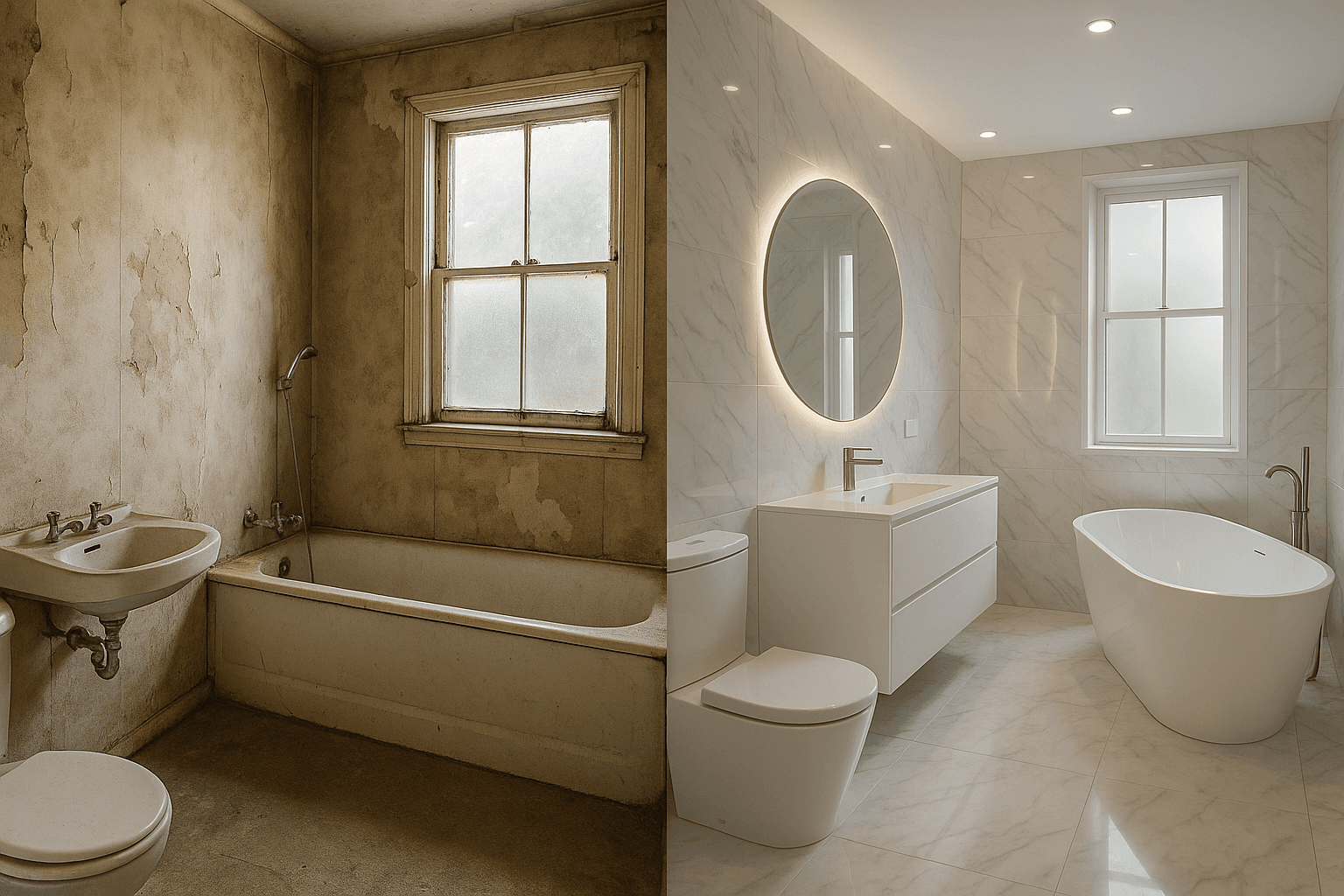
Transform your old bathroom into a luxury oasis with our premium renovation ideas and tips. Request your free quote and get started today!
Introduction
Transforming an old bathroom into a luxury oasis is an investment that not only enhances the aesthetics of your home but can also increase its functionality and value. In the premium renovation sector, every detail matters to achieve a space that reflects elegance and comfort. This article will guide you through the essential steps to carry out this transformation, highlighting key elements, current styles and trends, and the importance of sustainability in design.
Key Elements for Transformation

1. Selection of High-Quality Materials
The choice of materials is fundamental in any bathroom renovation. Opting for high-end ceramics, marble, or natural stone not only provides a luxurious look but also ensures durability. Additionally, consider installing heated floors for added comfort. According to a study by the National Association of Home Builders, using high-quality materials can increase a property's resale value by up to 10%.
1.1 High-End Ceramics and Porcelains
High-end ceramics and porcelains offer superior resistance to moisture and impacts. For example, porcelain tiles are a popular option due to their low porosity and high stain resistance. This type of material can withstand up to 1,000 abrasion cycles, making it an ideal choice for high-traffic areas like bathrooms. Moreover, large-format ceramics can reduce the number of visible joints, which not only improves aesthetics but also facilitates cleaning and maintenance, reducing cleaning time by up to 30% according to studies conducted by the Italian Ceramic Association.
1.2 Marble and Natural Stone
Marble, with its timeless elegance, is a classic option that never goes out of style. However, it is important to consider its maintenance, as it may require specific sealants to prevent stains. Natural stone, such as granite, offers exceptional durability and is less porous than marble, making it a more practical choice for the bathroom. For instance, granite can withstand extreme temperatures and is less susceptible to chemical stains, making it an ideal option for work surfaces in the bathroom.
1.3 Heated Floors
Installing heated floors can significantly enhance the user experience, especially in cold climates. According to a study by the Heating Professionals Association, 80% of homeowners who installed radiant floor heating systems reported higher overall satisfaction with their bathroom. This system not only provides even heat but can also be more energy-efficient than traditional radiators, as it operates at lower temperatures. Additionally, its installation can increase property value by 5-10% in markets where thermal comfort is highly valued.
2. Lighting and Ventilation
Proper lighting can radically transform a space. Use recessed LED lights and decorative sconces to create a cozy atmosphere. Ventilation is equally important; consider incorporating windows or extractors to maintain freshness. A study from Stanford University suggests that good lighting can increase productivity and well-being by 20%. Moreover, poor ventilation can lead to moisture and mold problems, which can affect health and the structural integrity of the bathroom.
2.1 Types of Lighting
There are three main types of lighting you can incorporate: ambient lighting, task lighting, and decorative lighting. Ambient lighting provides general light, while task lighting focuses on specific areas like the mirror. On the other hand, decorative lighting adds an aesthetic element, such as a chandelier or designer sconces. Combining different types of lighting can enhance the functionality of the bathroom, allowing daily tasks to be performed more comfortably and effectively.
2.2 Natural and Mechanical Ventilation
Natural ventilation can be achieved through windows that provide light and fresh air. Ensure that the windows are double-glazed to improve energy efficiency. On the other hand, controlled mechanical ventilation (CMV) systems are an excellent option for bathrooms without windows, as they help eliminate moisture and odors, maintaining indoor air quality. These systems can reduce humidity by 50% compared to bathrooms without adequate ventilation, thus preventing mold formation and improving the health of occupants.
3. Accessories and Decorative Details
Accessories are the finishing touch that can elevate your bathroom design. From elegant faucets to designer mirrors, each element should be carefully selected. These details can reflect your personal style and add a touch of luxury. A study from Cornell University found that decorative details can influence the perception of space, making users feel more comfortable and relaxed. Additionally, quality accessories can serve as an investment, as their durability can surpass that of cheaper options.
3.1 Designer Faucets
Designer faucets are not only functional but can also be a style statement. Opt for faucets with finishes in gold, matte black, or polished chrome for a contemporary touch. Additionally, consider faucets with water-saving technology, which can reduce water consumption by 30% without compromising pressure. For example, low-flow faucets are designed to maintain water pressure while limiting flow to 1.5 gallons per minute, compared to 2.2 gallons per minute of conventional faucets.
3.2 Mirrors with Integrated Lighting
Mirrors with integrated lighting are a growing trend, as they offer a practical and aesthetic solution. These mirrors can include anti-fog technology and dimmers, making them perfect for daily use. A well-lit mirror can enhance visibility and facilitate tasks like makeup application or shaving. Additionally, some models offer Bluetooth connectivity, allowing you to play music or receive calls, adding a layer of functionality to the space.
3.3 Natural Decorative Elements
Incorporating natural decorative elements, such as plants and wood, can bring a fresh and cozy atmosphere. Plants not only enhance aesthetics but also help purify the air. According to a study from the University of Queensland, plants can reduce indoor air pollutant concentrations by 50%. Likewise, wood can be used in furniture or as cladding, but it is essential to select treated species to withstand moisture and prolong its lifespan.
Styles and Trends 2026
1. Elegant Minimalism
Minimalism remains a predominant trend in bathroom design. Clear spaces, clean lines, and neutral colors create a serene environment. Ensure that each element serves a purpose and maintains aesthetics. According to a report from the interior design firm Houzz, 65% of homeowners prefer a minimalist style for its ability to maximize space. This approach can also reduce visual stress, contributing to a more relaxing experience in the bathroom.
1.1 Neutral Colors and Textures
Neutral colors such as white, gray, and beige are ideal for creating a relaxing atmosphere. However, don't forget to add textures through towels, rugs, and decorative elements to prevent the space from feeling cold. Combining different textures can enhance the perception of space, making it cozier. For example, a bathroom that combines matte tiles with shiny accessories can create an attractive visual contrast that adds interest without overwhelming.
1.2 Functional Furniture
Functional furniture is essential in a minimalist bathroom. Consider wall-mounted furniture that frees up floor space and makes cleaning easier. Open shelves can be an excellent option for displaying towels and bath products, as long as they are kept organized. Additionally, furniture with integrated storage helps keep the space clutter-free, which is key in minimalist design.
2. Industrial Style
This style incorporates materials such as iron, reclaimed wood, and exposed brick. Industrial bathrooms combine robustness with chic design, ideal for those seeking a bold style. According to a study by Architectural Digest magazine, 45% of interior designers have noticed an increase in demand for industrial styles in recent years. This style is characterized by its use of untreated materials that bring an authentic air to the space.
2.1 Metallic Elements
Metallic elements are key in industrial design. Consider stainless steel faucets or finishes in aged bronze for an authentic touch. Additionally, you can incorporate metal shelves for functional and aesthetic storage. Combining metals with reclaimed wood can create an attractive contrast and add distinctive character to the bathroom.
2.2 Material Combination
Combining different materials is fundamental in an industrial bathroom. For example, you can mix ceramic tiles with reclaimed wood floors. This combination is not only visually appealing but also brings a sustainable approach to design. Additionally, using polished concrete in combination with warm finishes can balance the coldness of the industrial environment and make it cozier.
3. Integrated Nature
Incorporating natural elements, such as plants, can bring life to your bathroom. Moreover, the use of sustainable and eco-friendly materials is on the rise, reflecting a trend towards more conscious design. A study from Harvard University suggests that spaces that integrate natural elements can reduce stress and increase productivity by 15%. Integrating natural elements not only enhances aesthetics but also promotes a healthier environment.
3.1 Use of Indoor Plants
Indoor plants such as ferns, snake plants, or pothos are ideal for bathrooms due to their ability to thrive in humid environments. Additionally, some of these plants are known for their air-purifying properties, improving air quality in the space. For example, pothos can eliminate up to 94% of airborne toxins within 24 hours, according to a NASA study.
3.2 Eco-Friendly Materials
Opting for eco-friendly materials, such as bamboo or reclaimed wood, can make a significant difference in the sustainability of your bathroom. Bamboo, for instance, is a renewable material that grows quickly and can be used in furniture and accessories. Additionally, be sure to choose paints and adhesives with low volatile organic compound (VOC) content to improve indoor air quality. By choosing these materials, you not only contribute to sustainability but also create a healthier environment for you and your family.
Sustainability in Renovations
Sustainability is a crucial aspect of current renovations. Opting for environmentally friendly products is not only responsible but can also improve indoor air quality. Consider water-saving fixtures and recycled materials for your renovations. According to a report from the Green Building Council, sustainable renovations can reduce energy costs by 30% over time. Additionally, implementing sustainable practices can increase the interest of potential buyers, which can translate into higher resale value.
1. Eco-Friendly Fixtures
Eco-friendly fixtures are designed to reduce water consumption without sacrificing pressure. For example, faucets with aeration technology can mix air with water, creating a feeling of greater flow while using less water. These systems can save up to 50% water compared to traditional faucets. Additionally, installing low-flow toilets can reduce water usage by 60%, which is not only beneficial for the environment but can also lower utility bills.
2. Recycled Materials
Incorporating recycled materials in your bathroom renovation is not only a sustainable choice but can also add character to the design. For example, tiles made from recycled glass are a popular option that offers a unique aesthetic and helps reduce landfill waste. Additionally, using bathroom furniture made from reclaimed wood contributes to the conservation of forest resources. This approach is not only responsible but can also create a warmer and more inviting atmosphere in the bathroom.
2.1 Advantages of Recycled Materials
Recycled materials not only help reduce environmental impact but can also offer economic advantages. For example, using recycled tiles can cost up to 20% less than new high-end tiles. Additionally, these materials tend to be more unique in their design, allowing for the creation of a personal and distinctive space. Also, by choosing locally sourced recycled materials, the carbon footprint associated with transportation is reduced, further contributing to the sustainability of the project.
3. Energy-Saving Systems
Installing energy-saving systems, such as low-consumption water heaters or LED lighting, can significantly reduce the environmental impact of your bathroom. According to the Environmental Protection Agency (EPA), homes using LED lighting can save between $75 and $200 annually on energy costs. Additionally, implementing efficient heating systems can reduce energy consumption by 20% compared to traditional systems, representing significant savings in the long run.
3.1 Efficient Water Heaters
Tankless water heaters are a popular option in sustainable renovations. These devices heat water on demand, which can result in energy savings of up to 30% compared to traditional water heaters. Additionally, their lifespan can be twice that of conventional heaters, resulting in less waste and a lower environmental impact in the long term.
3.2 Solar Energy for Hot Water
Installing solar water heating systems can be an excellent option for those looking to maximize sustainability in their bathroom. These systems use solar panels to heat water, which can significantly reduce dependence on non-renewable energy sources. According to the Solar Energy Association, this type of system can reduce energy bills by 50-80%, depending on location and available sunlight. Additionally, grants and tax incentives can make the installation of these systems more accessible.
Related Articles
- Optimize Space in Small Luxury Kitchens Marbella
- Custom vs Standard Bathroom Renovations in Málaga
- Benahavís Renovations: Luxury Company for Villas and Chalets
Need Professional Help?
At , we offer Bathroom Renovation, Kitchen Renovation, Comprehensive Renovation.
Conclusion and Call to Action
Transforming an old bathroom into a luxury oasis requires careful planning and attention to detail. By choosing high-quality materials, considering current trends, and adopting sustainable practices, you can create a space that is not only functional but also a true luxury retreat. To carry out your renovation, request your free quote at Costa del Sol Reformas.
4. Space Customization
Customization is an essential aspect of creating a luxury bathroom. You can opt for elements that reflect your personal style, such as custom tiles, personalized faucets, or even wall art. Customization can transform a standard bathroom into a unique space. According to a study by the interior design firm Zillow, homes with custom features can have a resale value up to 20% higher than those using standard elements.
4.1 Custom Tiles
Custom tiles are an excellent way to add a personal touch to your bathroom. You can choose patterns, colors, and textures that align with your vision. For example, some homeowners opt for hand-painted ceramic tiles that tell the story of their family or culture. This type of customization not only beautifies the space but can also increase the emotional connection that homeowners feel towards their home.
4.2 Custom Faucets
Custom faucets allow homeowners to select styles and finishes that suit their preferences. You can choose faucets with special features, such as integrated water filtration systems or temperature control technologies that enhance comfort. For example, some faucet models allow you to set the water temperature to a preset level, improving the user experience. This attention to detail not only enhances functionality but can also be an attractive focal point in the bathroom design.
4.3 Wall Art and Decoration
Incorporating wall art or personalized decorative elements can bring life to your bathroom. Some trends include nature murals or mosaics that add color and texture to the space. A study from the University of California found that including art in the home can increase residents' satisfaction and well-being by 30%. Additionally, unique decorative elements can spark conversations among friends and family, making the bathroom a more welcoming and personal space.
\nRelated Articles
\n- \n
- Home \n
- Optimize Space in Small Luxury Kitchens Marbella \n
Frequently Asked Questions
How long does it take to renovate a bathroom?
The time it takes to renovate a bathroom can vary depending on the scope of the project, but it is generally estimated to be between 3 to 6 weeks.
What materials are recommended for a luxury bathroom?
For a luxury bathroom, materials such as marble, high-end ceramics, and designer fixtures are recommended.
Is ventilation necessary in a renovated bathroom?
Yes, ventilation is crucial to avoid moisture buildup and maintain a healthy environment.
How can I ensure that my renovation is sustainable?
Choose recycled materials, water-saving systems, and products with environmental certifications.
Can I make changes to the original bathroom design?
Yes, during a renovation you can completely redesign the space, as long as local regulations are met.
