
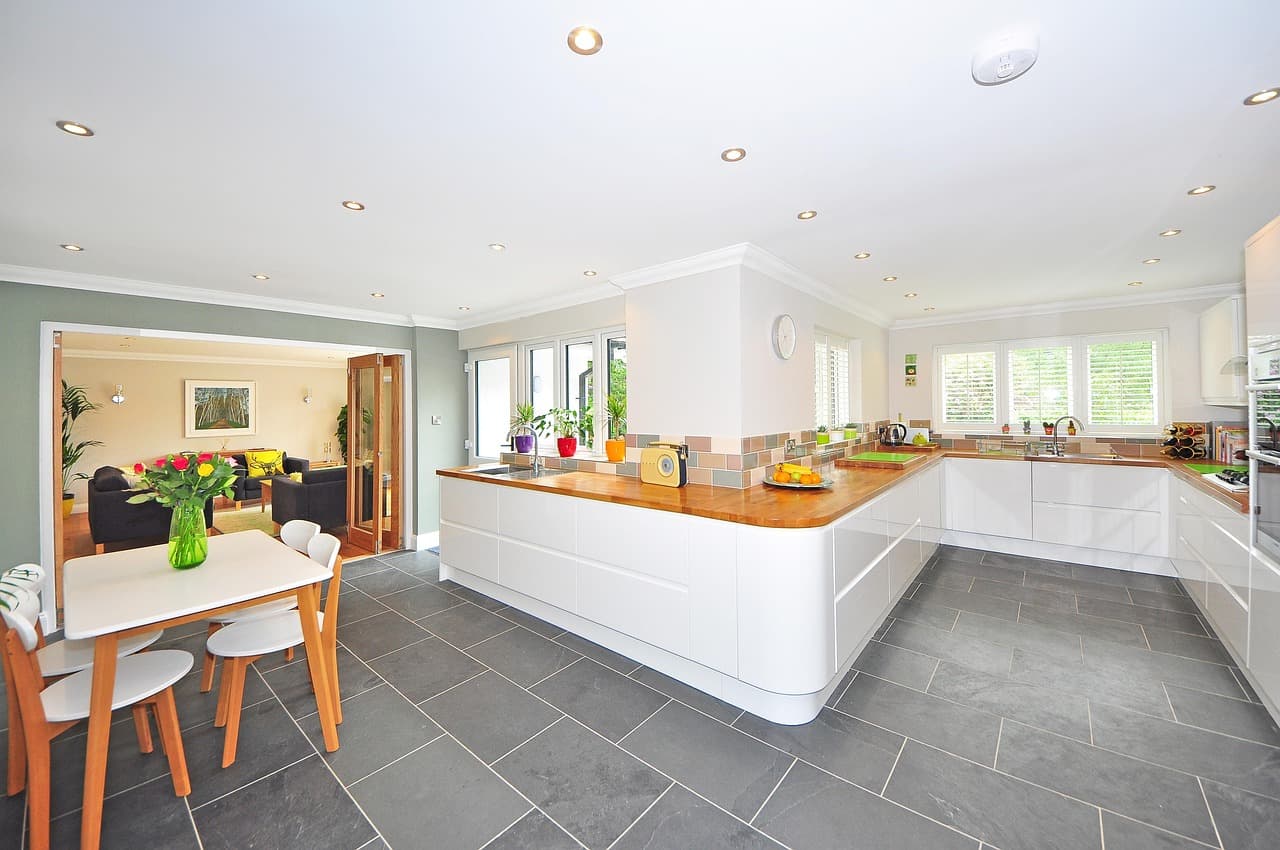
Integrate internet installation and cabling into your renovation on the Costa del Sol. Planning, costs and tips for seamless connectivity. Request.
The key to a modern renovation: planning the cabling before you start

When you tackle a renovation on the Costa del Sol, whether in Marbella, Estepona or Mijas, one of the most overlooked aspects is the internet installation and cabling. However, once the walls are closed up, modifying the network infrastructure becomes a headache. That is why, in this practical guide, we explain how to integrate structured cabling, fibre optics and WiFi networks into your renovation project, with real pricing and timeline data for the area.
Cabling planning not only affects your connection speed, but also the added value of your property. A home with modern network infrastructure is more attractive to buyers and tenants, especially in a market like the Costa del Sol, where remote working and smart homes are on the rise.
Types of cabling you should consider for your renovation
Before you begin, it is essential to know the cabling options available. In a full renovation, you can choose from:
- Fibre optic cabling: The most recommended option to guarantee symmetrical speeds of up to 1 Gbps. The installation cost in an average home in Marbella is around €150-300, depending on the distance from the operator's entry point.
- Ethernet cabling (Cat 6 or Cat 7): Ideal for connecting fixed devices such as televisions, consoles or work equipment. The price per network point (including conduit, cable and wall socket) is usually between €60 and €120.
- Coaxial cabling: Although outdated, some homes still use it for cable TV. If your renovation allows it, it is better to replace it with fibre or Ethernet.
The choice will depend on your needs and budget. A good professional will advise you to avoid unnecessary extra costs.
Cabling planning: steps before the work begins

Integrating cabling into your renovation requires meticulous planning. These are the key steps:
- Design the network layout: Define where the router, network points, security cameras, and smart devices will be located. Draw a floor plan of your home and mark the locations.
- Choose the location for the communications cabinet: A central point where all cables converge. Ideally, a small cabinet in a hallway or storage room, with space for the router, a switch, and the fibre optic termination unit.
- Plan the conduits: During the renovation, this is the time to install corrugated tubing in walls and floors to run the cables through. This makes future upgrades easier without any construction work.
- Coordinate with your renovation company: Make sure your contractor is aware of the cabling plan and integrates it into the construction schedule. In turnkey comprehensive renovations, this type of coordination is essential.
Indicative costs for internet installation and cabling on the Costa del Sol
Prices vary depending on the area and complexity, but these are indicative ranges for 2026:
| Item | Indicative price (€) |
|---|---|
| Fibre optic installation (labour) | 150 - 300 |
| Ethernet network point (materials and labour) | 60 - 120 |
| Communications cabinet (materials) | 80 - 200 |
| WiFi 6 router (if not provided by the operator) | 100 - 250 |
| Additional WiFi access point | 80 - 150 |
| IP video intercom (installed) | 200 - 400 |
| Complete structured cabling installation (100 m² home) | 800 - 1,500 |
These prices are indicative and may vary depending on the provider and location. For a quote tailored to your specific case, we recommend using our renovation budget calculator.
Integration with home automation and smart systems
One of the advantages of planning the cabling during the renovation is the possibility of integrating home automation. From lighting control to climate management, everything can be managed through a centralised network. On the Costa del Sol, where the climate is warm, home automation allows you to optimise air conditioning consumption, resulting in significant energy savings.
Installing a basic smart home system (compatible with Google Home or Alexa) can cost between €500 and €2,000, depending on the devices. If you want to go deeper, we invite you to read our article on home automation in Málaga.
Tips for a perfect WiFi connection in your renovated home
Even with Ethernet cabling, WiFi remains essential for mobile phones and laptops. To avoid dead zones:
- Install access points on ceilings or strategic walls, especially in two-storey homes.
- Use WiFi mesh repeaters if you don't want to run more cables.
- Place the router in a central position, away from appliances that could cause interference.
A well-designed network will prevent future frustrations and improve the user experience of all devices.
How cabling affects the value of your property
In a real estate market like the Costa del Sol, a home with modern network infrastructure is a plus. Buyers, especially expats who work remotely, value having fibre optics and network points in every room. If you're thinking of selling or renting, investing in cabling during the renovation is a smart decision.
Furthermore, if your property is in a high tourist demand area, such as Marbella or Fuengirola, a good connection is essential for holiday rentals. In our article on holiday apartment renovations you'll find more details.
Regulations and permits for cabling works
In Spain, installing cabling in a home does not require specific permits, but it must comply with the Technical Building Code (CTE), which regulates the common telecommunications infrastructure (ICT). If your renovation affects common areas of the building, you'll need approval from the homeowners' association. Additionally, it's advisable to hire an authorised installer to guarantee safety and proper connection to the operator's network.
For more information on building regulations, you can check the Ministry of Transport, Mobility and Urban Agenda website.
Common mistakes when integrating internet and cabling into a renovation
Avoid these mistakes that many homeowners make:
- Not planning conduits: If you don't install ducts during the works, it will be impossible to run cables later without chipping into walls.
- Forgetting the router location: Placing it in a metal cabinet can block the WiFi signal.
- Underestimating the number of network points: It is better to have too many than too few, especially in the living room and home office.
- Not hiring a professional: Poorly done cabling can cause interference and connection failures.
If you are planning a full renovation in Marbella or the surrounding areas, on our Marbella renovation page you will find more information on how we handle these aspects.
Related articles
- Premium renovation in Marbella: 5 trends for 2026
- Premium Renovation in Marbella: 7 Mistakes to Avoid
- Villa renovation in Marbella: real timelines and costs for 2026
Need professional help?
At Costa del Sol Reformas in Marbella, Costa del Sol, Málaga, we offer Bathroom Renovation, Kitchen Renovation, and Full Renovation. Call us: 612 286 273.
Frequently asked questions about internet installation and cabling in renovations
How much does it cost to install fibre optic during a renovation?
Installing fibre optic in a renovated home usually costs between €150 and €300 if the operator already has coverage. If construction work is needed to bring it in from the street, the cost may increase.
Is it necessary to hire an electrician for network cabling?
Yes, it is advisable for an electrician or a telecommunications installer to carry out the cabling to ensure it complies with regulations and to avoid safety issues.
Can I install the cabling myself?
If you have technical knowledge, you can do it, but it is risky. A mistake can damage equipment or cause interference. Furthermore, for the final connection to the operator's network, you will need a professional.
What type of cable is best for a home: fibre or Ethernet?
Fibre optic is ideal for the main connection from the provider, but inside the home, Cat 6 Ethernet cable or higher is recommended for connecting fixed devices. WiFi is used for mobiles and laptops.
How many network points do I need in a 100 m² home?
It depends on your habits, but at least one in the living room, one in each bedroom and two in the study is recommended. If you have devices such as Smart TVs or consoles, add more.
What is a communications cabinet and where should it be located?
It is a small cabinet where all the cables and the router are concentrated. It should be in an accessible place, such as a hallway or storage room, and with ventilation to prevent overheating.
Can I integrate home automation into a renovation without cabling?
Yes, wireless solutions exist, but cabling guarantees greater stability and speed. If you are renovating, this is the ideal time to install cabling and future-proof your home.
Trust professionals for your renovation on the Costa del Sol
At Costa del Sol Reformas we are experts in full renovations in Marbella, Estepona, Benahavís, Mijas, Fuengirola and the entire Costa del Sol. Our team coordinates all aspects of the project, including internet and cabling installation, to ensure your renovation is a success. We work with fixed budgets and realistic timelines, and we offer a reliable service for both Spanish homeowners and expats managing their renovation remotely.
If you are planning a renovation and want to ensure connectivity is perfectly integrated, request your free quote today. Call us on 612 286 273 or visit our website at costadelsolreformas.com.
Home network infrastructure: technical planning and professional execution
The integration of structured cabling during a comprehensive renovation is not a technological whim, but a statistical necessity. According to data from the National Statistics Institute (INE) for 2023, 96.1% of Spanish households have an internet connection, and 78% of them use more than five connected devices simultaneously (router, smart TVs, consoles, voice assistants, computers and mobile phones). However, 65% of current installations suffer from poor Wi-Fi access point distribution, causing dead zones and performance losses of over 40% in rooms far from the router. In a premium renovation on the Costa del Sol, where homes often exceed 150 m² and feature thick load-bearing walls, a wireless solution alone proves insufficient. Therefore, the installation of fibre optic cabling and Category 6A (or higher) Ethernet cable becomes the backbone of a seamless digital experience, capable of supporting symmetrical speeds of 1 Gbps or more, which are already common among operators in the area.
Technical planning must begin before a single wall is raised. A common mistake is deciding the location of network outlets once the masonry work is finished, which forces visible trunking or additional chases that increase the project cost by between 15% and 25%. The professional recommendation is to designate a central communications cabinet (also called a home rack or distribution point) in a thoroughfare area, preferably close to the operator's fibre optic entry point. This cabinet, with minimum dimensions of 60x60 centimetres, should house the main router, a network switch with at least 8 Gigabit ports, and a patch panel that centralises all the home's cables. From this point, independent 25 mm diameter conduits should be run to each main room: living room, bedrooms, kitchen and, especially, towards any home office or remote working area. The UNE EN 50173-1 standard recommends a minimum of two data outlets per room, although in high-end renovations it is common to install four, anticipating the future expansion of IoT (Internet of Things) devices.
The cable installation must be carried out following strict rules of physical separation from the electrical installation. It is a critical error to share a conduit or tray with 230V power cables, as electromagnetic interference (EMI) can degrade the signal and cause transmission errors over distances greater than 20 metres. The recommended practice is to maintain a minimum separation of 30 centimetres between the network cabling and the electrical cabling, and if they must cross, always do so at a right angle of 90 degrees. As for the type of cable, for a premium renovation it is recommended to use FTP (Foiled Twisted Pair) cable of category 6A, which offers a bandwidth of 500 MHz and supports speeds of 10 Gbps up to 100 metres. This cable, in addition to being individually shielded, has an overall foil that protects it from external interference, something crucial in homes with numerous high-power appliances. Market data indicates that the additional cost of using category 6A cable compared to standard category 6 only represents an increase of 8-12% on the total cabling budget, but guarantees a service life for the installation of at least 15 years without the need for replacement.
Once the structural work is finished, the cabling installation must follow a certification protocol, not a simple continuity check. A certified installer must use a copper network analyser (for example, Fluke Networks or equivalents) to verify that each link meets the attenuation, crosstalk (NEXT, FEXT) and propagation delay parameters required by the ANSI/TIA-568.2-D standard. This process, which usually takes between 15 and 20 minutes per outlet, guarantees that the cabling will support future 10 Gbps speeds without errors. In practice, 30% of non-certified home installations present intermittent faults that manifest as connection drops or reduced speeds, problems that are difficult to diagnose once the walls are closed. Furthermore, it is essential to label each cable at both ends (in the communications cabinet and at the room's wall outlet) following a clear nomenclature (for example, SAL-01
References
- Technical Building Code
- Ministry of Transport and Housing
Frequently Asked Questions
How much does it cost to install fibre optics in a renovation?
The installation of fibre optics in a renovated home on the Costa del Sol usually costs between 150 and 300 euros, provided the operator has coverage in the area. If construction work is required to bring the cable from the street, the cost may increase. It is advisable to include this expense in the renovation budget.
Is it necessary to hire an electrician for the network cabling?
Yes, it is essential to have a certified electrician or telecommunications installer. They ensure that the wiring complies with current regulations (CTE) and prevent safety issues or interference. Additionally, a certified technician is required for the final connection to the operator's network.
Can I install the wiring myself?
If you have technical knowledge, you could do it, but it is risky. An error in the wiring can damage equipment or cause interference that affects the entire network. Furthermore, for the connection to the operator's network, you will need the intervention of a professional. We recommend leaving this job to experts.
What type of cable is best for a home: fibre or Ethernet?
Fibre optic is ideal for the main connection from the operator, as it offers symmetrical speeds of up to 1 Gbps. Inside the home, Cat 6 Ethernet cable or higher is recommended for connecting fixed devices such as Smart TVs, consoles, or work equipment. WiFi is used for mobile devices.
How many network points do I need in a 100 m² home?
It depends on your usage habits, but at least one in the living room, one in each bedroom, and two in the study is recommended. If you have devices such as Smart TVs, consoles, or printers, add additional points. It is better to install more than fewer, as expanding later is costly.
What is a communications cabinet and where should it be located?
It is a small cabinet where all the cables and the router are concentrated. It should be located in an accessible place, such as a hallway or storage room, and with ventilation to prevent overheating. A good cabinet facilitates maintenance and future network expansions.
Can I integrate home automation into a renovation without wiring?
Yes, wireless solutions exist, but wiring guarantees greater stability and speed. If you are renovating, it is the ideal time to install wiring and prepare the home for the future. Wired home automation is more reliable and allows more devices to be integrated.