
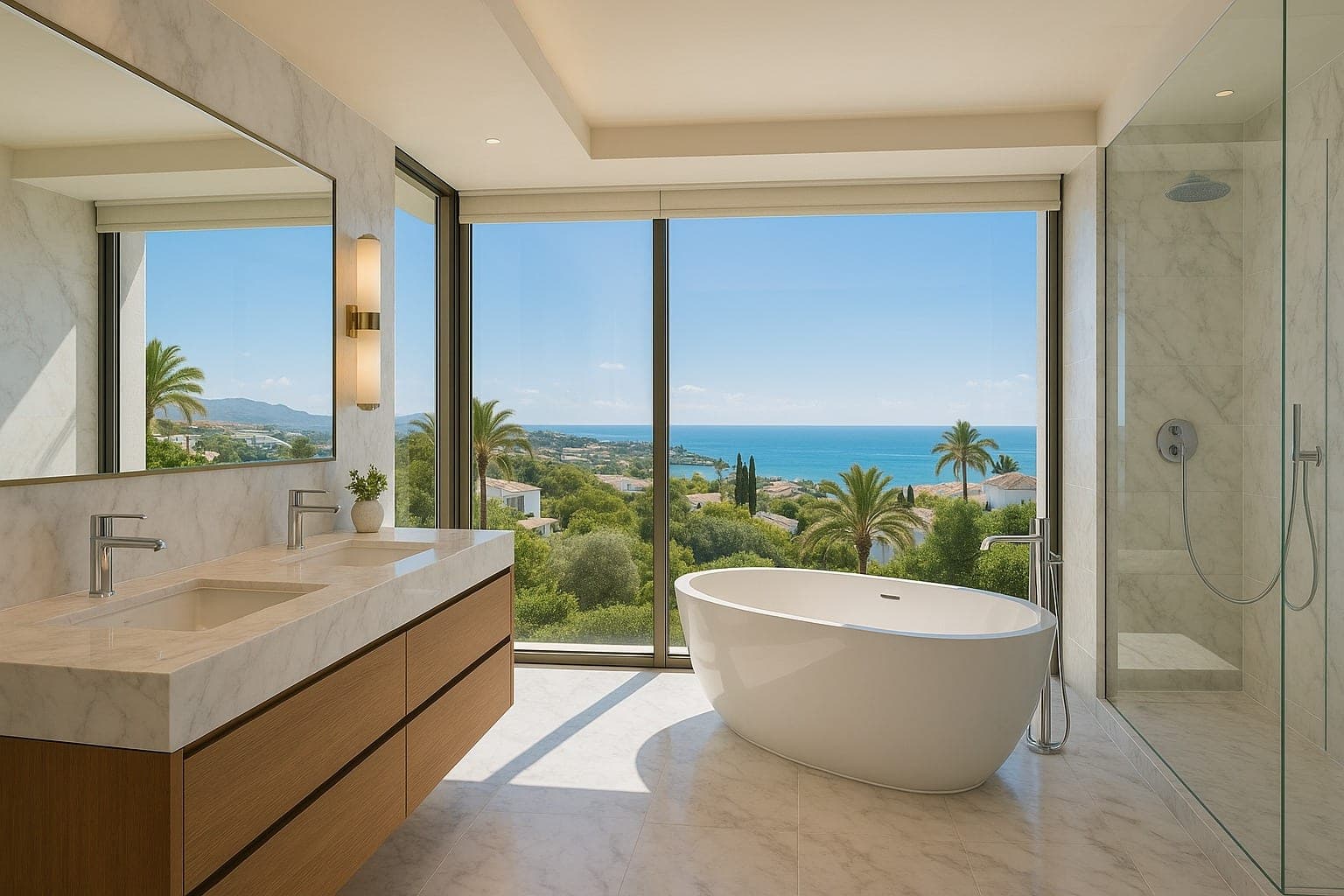
Transform your bathroom into a luxury space on the Costa del Sol. Discover tips and trends for premium renovations. Request your free quote.
Introduction
On the Costa del Sol, luxury bathroom renovations have become one of the most sought-after trends among homeowners and villa owners. This boom is due not only to the desire to improve the aesthetics and functionality of these spaces, but also to the need to increase property value in a highly competitive real estate market. Well-executed renovations can turn a bathroom not just into a place of hygiene, but into an oasis of well-being and comfort.
The bathroom is considered one of the most important spaces in a home. According to recent studies, homeowners who invest in renovating their bathrooms can see a significant return on their property's value. Therefore, it is crucial to understand the key elements involved in a luxury renovation, from material selection to design planning.
Analysis of materials and durability

One of the most critical aspects of luxury bathroom renovations is material selection. In this context, durability and aesthetics play a fundamental role. Materials such as Carrara marble, natural stone, and high-quality finishes are essential for a luxury result.
The choice of materials must be aligned not only with the desired aesthetic, but also with their ability to withstand moisture and wear. For example, microcement has become popular for its durability and ease of maintenance, making it a preferred option for floors and walls in luxury bathrooms.
Furthermore, a wide range of products that combine design and functionality are offered, guaranteeing quality and durability. It is important to consider that by investing in high-end materials, you are ensuring not only a better appearance, but also greater longevity for the renovated space.
Marble and natural stone
Carrara marble is a classic in luxury renovations. Its timeless beauty and unique characteristics make it a popular choice. This type of marble has high compressive strength (approximately 200 MPa) and is relatively easy to clean, making it a practical and aesthetically appealing option. However, it is essential to apply a sealant to protect it from stains and moisture.
Natural stone, such as granite and slate, are also viable options. Granite, for example, is extremely hard and resistant to stains, making it ideal for vanity countertops. Slate, on the other hand, adds a rustic touch and is highly resistant to moisture, making it an excellent choice for flooring.
Microcement and its versatility
Microcement has gained popularity in recent years due to its versatility and modern aesthetic. This material is applied in thin layers and can be used on floors, walls, and even furniture surfaces. Its resistance to water and abrasion makes it ideal for humid environments such as bathrooms. Additionally, it is available in a variety of colors and finishes, allowing for complete customization of the space.
Design and architecture processes
The design of a luxury bathroom should be a meticulous process that considers both functionality and aesthetics. Initial planning includes assessing the available space and determining the specific needs of the homeowner.
The open-concept approach has become popular in bathroom design, allowing for a greater sense of spaciousness and brightness. Incorporating elements such as flush-to-floor showers, freestanding bathtubs, and double vanities are trends that add an exclusive and contemporary touch.
Furthermore, it is essential to work with architects and interior designers who understand local regulations, such as the Technical Building Code (CTE), to ensure that all aspects of the renovation comply with current legislation and that the necessary municipal permits can be obtained.
Space planning
To maximize functionality, it is important to carry out a detailed study of the available space. This may include the use of 3D design software that allows visualizing how the bathroom will look after the renovation. Modern design tools allow homeowners to experiment with different layouts of elements, optimizing flow and accessibility.
Luxury elements in design
Luxury elements, such as designer faucets, whirlpool bathtubs, and LED lighting systems, are essential in a luxury bathroom. For example, the faucets stand out for their EcoSmart technology, which reduces water consumption by 60% without sacrificing performance. Furthermore, freestanding bathtubs have become a symbol of luxury and comfort, offering a space for relaxation in the home.
Energy efficiency and applied technology
Sustainability and energy efficiency are increasingly relevant trends in luxury renovations. Incorporating smart technology, such as home automation systems, allows for managing energy consumption and improving the bathroom's functionality.
From faucets that reduce water flow to underfloor heating systems, the options are diverse and align with a more conscious and responsible lifestyle. Additionally, installing materials that provide better thermal insulation contributes to the home's energy efficiency.
Home automation systems
Home automation systems allow for the automation of various functions in the bathroom, from controlling water temperature to managing lighting. These systems can be programmed to create different environments, increasing comfort and energy efficiency. For example, motion sensors can be installed that automatically turn on the lights when someone enters the bathroom, reducing unnecessary energy consumption.
Efficient faucets and sanitary fixtures
Installing low-consumption faucets and sanitary fixtures can significantly reduce water usage. For example, dual-flush toilets can save up to 30% more water compared to traditional models. Likewise, faucets with aerators can reduce water flow without sacrificing pressure, contributing to more efficient use of the resource.
Legal aspects and regulations on the Costa del Sol
Before starting any renovation, it is essential to understand the legal aspects governing the Costa del Sol. Each municipality, whether Marbella, Málaga, or Benalmádena, has specific regulations that govern architectural renovations.
Obtaining the necessary licenses is a crucial step in the process. Failure to comply with regulations can result in penalties and legal complications. Therefore, it is advisable to work with professionals who have experience in license management and who know the local administrative process.
Construction licenses and permits
Building permits can vary depending on the scale of the renovation. For minor renovations, a responsible declaration may be sufficient, while larger renovations will require a technical project and obtaining a building permit. It is essential to have an architect or engineer who can ensure that the project complies with all local regulations, which may include restrictions on materials and architectural styles.
Safety and accessibility regulations
Renovations must also comply with safety and accessibility regulations. This includes installing elements such as grab bars in showers and bathtubs, as well as ensuring that access to the bathroom is suitable for people with reduced mobility. These regulations are not only legal but also contribute to creating a safer and more accessible space for all users.
Schedule management and 'Turnkey' solutions
Time management is essential in any renovation project. A 'Turnkey' approach allows homeowners to avoid complications, as the renovation company handles all aspects, from planning to execution and completion of the project.
This type of management not only optimises timelines but also ensures that quality standards are maintained at all times. By choosing this model, homeowners can enjoy a stress-free experience, trusting that their bathroom will be transformed into a luxury space that meets their expectations.
Advantages of the 'Turnkey' model
One of the most significant advantages of the 'Turnkey' approach is the reduction in execution times. By having a single provider responsible for the entire project, delays caused by coordination between different contractors are minimised. This can result in a reduction of the total renovation time of up to 30% compared to a traditional approach where different specialists are hired separately.
Example of a successful project
A successful example of a 'Turnkey' renovation on the Costa del Sol involved the transformation of a 10 m² bathroom in a villa in Marbella. The project included the installation of an underfloor heating system, a freestanding bathtub, and a double vanity. The total duration of the project was 6 weeks, and the homeowner reported a 20% increase in the property's value after the completion of the renovation.
Related articles
- Frequently Asked Questions about Premium Renovations on the Costa del Sol
- Benahavís Renovations: Luxury Company for Villas and Chalets
- El Higuerón Benalmádena Luxury Renovations: Your complete guide
Do you need professional help?
At Costa del Sol Reformas, we offer Bathroom Renovation, Kitchen Renovation, and Full Home Renovation.
Luxury Bathroom Renovations on the Costa del Sol: Data and Practical Recommendations
The Costa del Sol has become a prime destination for those looking to renovate their spaces, especially bathrooms, with a focus on luxury and functionality.
When undertaking a luxury bathroom renovation, it is crucial to consider certain elements that can elevate the user experience. For example, the installation of rainfall showers and freestanding bathtubs has gained popularity, with a 40% increase in demand for these products in recent years. Additionally, incorporating smart technology, such as automatic taps and adjustable LED lighting systems, can improve functionality and energy savings in the bathroom.
To maximise the investment in luxury bathroom renovations, it is recommended to choose high-quality materials that are not only aesthetically pleasing but also durable. Marble and high-end ceramics are popular options, with an estimated return on investment of 75% to 85% in property value. Likewise, it is advisable to work with experienced professionals on the Costa del Sol, who can offer customised solutions and guarantee an impeccable finish.
Finally, it is important to consider the design and layout of the space. A well-designed bathroom not only improves functionality but can also become a personal oasis. The current trend suggests that open bathrooms, which connect to the bedroom or the outdoors, are on the rise, allowing for greater natural light and a sense of spaciousness, which could increase the property's appeal by 10% in the local real estate market.
Frequently Asked Questions
How long does a luxury bathroom renovation take on the Costa del Sol?
The renovation time may vary depending on the complexity of the project, but it generally ranges between 4 and 8 weeks.
What materials are recommended for a luxury bathroom?
Materials such as marble, natural stone, microcement, and high-end ceramics are excellent options.
Is it necessary to obtain permits to renovate a bathroom?
Yes, it may be necessary to obtain specific permits depending on the scope of the renovation.
What does a 'Turnkey' renovation service include?
It includes comprehensive project management, covering everything from design to final delivery.
How can space be maximised in a small bathroom?
Using built-in furniture and showers, as well as mirrors to create a sense of spaciousness.
Ready to start your renovation? Call us: 612 286 273
