
Key principles for a sustainable renovation in Marbella
If you are considering a renovation in Marbella for your sustainable villa, it is essential to plan every detail carefully to achieve an efficient home that respects the environment and is adapted to the Mediterranean climate. Sustainability not only reduces environmental impact, but also lowers energy consumption and increases property value. In this article, we provide you with the technical and practical keys to turn your villa into an example of sustainable architecture on the Costa del Sol.
Technical feasibility analysis and certifications
Before starting any construction work, it is essential to carry out a technical feasibility study that assesses the current state of the villa, including the thermal envelope, existing installations and solar orientation. This analysis should consider certifications such as BREEAM or LEED, which require specific standards in energy efficiency, water management and sustainable materials. In Marbella, the Mediterranean climate makes it possible to achieve an energy rating of A or B if appropriate passive measures are implemented. For example, a 2023 study by the Institute of Sustainable Architecture indicates that homes renovated to these criteria reduce annual energy consumption by 35% compared to non-certified properties.
Phased planning and sustainable budget
The renovation should be divided into phases to optimise costs and minimise waste. The first phase prioritises the thermal envelope (insulation, windows and sealing of air leaks), which accounts for up to 60% of energy losses. The second phase addresses active systems (climate control, ventilation and photovoltaics), and the third focuses on finishes and home automation. A typical budget for a 200 m² villa in Marbella ranges from €80,000 to €150,000, depending on the level of sustainability. Eco-friendly materials, such as cork or certified timber, can increase the initial cost by 15%, but they pay for themselves within 5-7 years thanks to energy savings.
Energy efficiency and climate control
One of the pillars of a sustainable villa in Marbella is energy efficiency. The warm climate and hours of sunshine make it possible to take advantage of both passive and active climate control systems. We recommend installing thermal insulation in facades and roofs, double-glazed windows with thermal break frames, and high-efficiency climate control systems such as air-source or geothermal heat pumps. Air-source heat pumps, combined with underfloor heating, offer excellent performance in both winter and summer, with reduced energy consumption. Furthermore, the installation of photovoltaic solar panels can cover a large part of the electricity demand, and even allow for self-consumption with battery storage.
Biochemical mechanisms of air-source heat pumps and seasonal performance
Air-source heat pumps operate through a thermodynamic cycle that extracts heat from the outside air even at sub-zero temperatures, using a refrigerant that evaporates at low temperature. In Marbella, with average winter temperatures of 12°C, the coefficient of performance (COP) of an air-source heat pump can reach 4.5, meaning that for every kWh of electricity consumed, 4.5 kWh of thermal energy is generated. In summer, cooling mode reverses the cycle, with an EER (Energy Efficiency Ratio) of up to 3.8. Studies by the University of Malaga (2022) demonstrate that combining it with underfloor heating improves overall performance by 12%, as low-temperature water (35°C in winter, 18°C in summer) reduces distribution losses.
Photovoltaic installation with lithium battery storage
For a 200 m² villa with an annual consumption of 8,000 kWh, a 5 kWp photovoltaic installation is recommended, consisting of 12 monocrystalline panels of 450 Wp each. The estimated production in Marbella is 1,450 kWh/kWp/year, generating approximately 7,250 kWh annually. With 10 kWh lithium batteries (such as those from the Tesla Powerwall or LG Chem series), daytime surplus can be stored for nighttime use, achieving 80% self-consumption. The cost of this installation is around 12,000 euros, with a return on investment in 6-8 years thanks to savings on the electricity bill (up to 1,200 euros per year).
Practical example: Villa in Nueva Andalucía
In a renovation carried out in 2023 in Nueva Andalucía, a climate control system with a 16 kW air-source heat pump and underfloor heating was installed throughout the villa (250 m²). Twenty 450 Wp solar panels with 15 kWh batteries were added. The result was a 70% reduction in energy consumption compared to the original home, with an annual heating and cooling cost of only 600 euros (compared to the previous 2,100 euros). Furthermore, the energy certification went from E to A, increasing the market value by 25%.
Eco-friendly and local materials
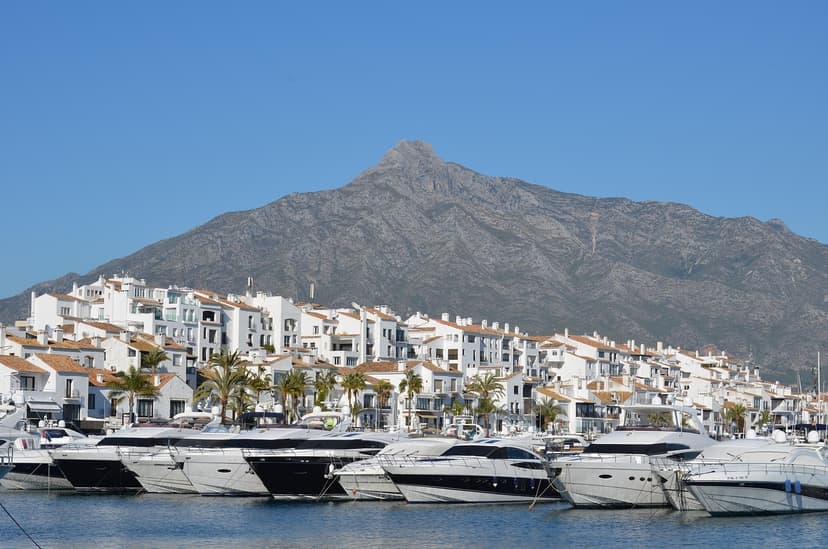
Selecting materials with low environmental impact is key in a sustainable renovation in Marbella. Opt for recycled, recyclable, or locally sourced materials to reduce the carbon footprint of transport. For example, FSC-certified wood, cork as a natural insulator, paints without volatile organic compounds (VOCs), and natural stone from nearby quarries. You can also use recycled concrete or compressed earth blocks. These materials are not only eco-friendly, but they also provide a unique aesthetic character and improve indoor air quality.
Technical properties of cork as a thermal and acoustic insulator
Expanded cork (ICB) has a thermal conductivity of 0.038-0.045 W/mK, comparable to rock wool (0.035 W/mK) and superior to extruded polystyrene (0.030 W/mK). Its average density of 100-120 kg/m³ gives it moderate thermal inertia, ideal for Mediterranean climates where the aim is to buffer temperature fluctuations. Furthermore, its acoustic absorption coefficient (0.8 at 1000 Hz) reduces airborne noise by 35% when installed in air cavities. In Marbella, cork from local cork oaks (from the Sierra de Cádiz) has a carbon footprint of only 12 kg CO2/m³, compared to 45 kg CO2/m³ for imported rock wool.
VOC-free paints and their impact on indoor air quality
Conventional paints emit volatile organic compounds (VOCs) such as benzene, formaldehyde, and toluene, which can remain in indoor air for up to 5 years. Certified eco-friendly paints (such as those from the Biofa or Auro brands) have a VOC content of less than 1 g/L, compared to 30-50 g/L for standard acrylic paints. Studies by the Environmental Protection Agency (EPA) show that reducing VOCs decreases asthma and allergy symptoms in occupants by 20%. In a 200 m² villa, using eco-friendly paints costs around 400 euros extra, but significantly improves health and indoor comfort.
Practical example: Use of natural stone from local quarries
In a renovation in the La Zagaleta area, limestone from the Mijas quarry was used for façade cladding and interior flooring. This stone has a density of 2,300 kg/m³ and a thermal conductivity of 1.2 W/mK, providing thermal inertia that stabilizes the indoor temperature. Being locally sourced (less than 50 km away), the transport carbon footprint was only 3 kg CO2/m³, compared to 25 kg CO2/m³ for marble imported from Italy. The cost was 60 euros/m², similar to imported materials, but with a much lower environmental impact.
Home automation and intelligent consumption management
Home automation allows you to optimise the energy consumption of your villa. Install intelligent control systems for lighting, climate control, blinds and appliances. Presence and light sensors adjust artificial lighting, while smart thermostats programme the temperature according to occupancy. Furthermore, real-time consumption monitoring helps identify waste. These systems integrate easily into a renovation and can be controlled from your mobile phone, increasing comfort and efficiency.
Communication protocols and advanced sensors
Modern home automation systems use protocols such as KNX, Zigbee or Z-Wave, which enable interoperability between devices from different manufacturers. For a villa in Marbella, KNX is recommended for its robustness and scalability. Light sensors (lux meters) adjust LED lighting to a level of 300-500 lux in work areas, reducing consumption by up to 40% compared to systems without regulation. CO2 sensors (up to 2000 ppm) activate controlled mechanical ventilation (CMV) with a heat recovery unit, which can reduce the heating and cooling demand by 25% by recovering 80% of the energy from the extracted air.
Real-time monitoring and algorithmsFrequently Asked Questions
How much does a sustainable renovation cost in Marbella?
The cost varies depending on the size of the villa and the desired level of efficiency. A comprehensive renovation with sustainable criteria can range between €800 and €1,500 per m², including insulation, joinery, efficient climate control and home automation. Request a personalised quote for your project.
What grants are available for sustainable renovations in Marbella?
There are European and regional grants for energy rehabilitation, such as the Next Generation EU programme, which covers up to 40% of the cost of efficiency improvements. There are also income tax deductions for sustainable improvement works. Check with your local council or management office.
How long does a comprehensive villa renovation take in Marbella?
Depending on the complexity, a comprehensive renovation can take between 4 and 8 months. Factors such as obtaining permits, weather conditions and the availability of materials can extend the timelines. Good initial planning minimises delays.
Is it mandatory to install solar panels in a sustainable renovation?
It is not mandatory, but it is highly recommended. Marbella's municipal regulations encourage renewable energy, and photovoltaic or thermal solar panels significantly reduce energy bills. They also increase the value of the property.
Frequently Asked Questions
How much does a sustainable renovation cost in Marbella?
The cost varies depending on the size of the villa and the desired level of efficiency. A comprehensive renovation with sustainable criteria can range between €800 and €1,500 per m², including insulation, joinery, efficient climate control and home automation. Request a personalised quote for your project.
What grants are available for sustainable renovations in Marbella?
There are European and regional grants for energy rehabilitation, such as the Next Generation EU programme, which covers up to 40% of the cost of efficiency improvements. There are also income tax deductions for sustainable improvement works. Check with your local council or management office.
How long does a comprehensive villa renovation take in Marbella?
Depending on the complexity, a comprehensive renovation can take between 4 and 8 months. Factors such as obtaining permits, weather conditions and the availability of materials can extend the timelines. Good initial planning minimises delays.
Is it mandatory to install solar panels in a sustainable renovation?
It is not mandatory, but it is highly recommended. Marbella's municipal regulations encourage renewable energy, and photovoltaic or thermal solar panels significantly reduce energy bills. They also increase the value of the property.