

¿Qué define una reforma premium?
Una reforma premium en Marbella va más allá de una simple renovación. Implica un diseño exclusivo, materiales de primera calidad, acabados impecables y una ejecución meticulosa. Este tipo de proyectos suele incluir reformas integrales de villas, apartamentos de lujo y espacios comerciales de alto nivel. La elección del contratista es crucial para garantizar que el resultado final cumpla con las expectativas de calidad y estilo propias del mercado marbellí. En este artículo te ofrecemos una guía práctica para seleccionar al profesional adecuado para tu reforma premium.
Características técnicas de una reforma premium
Una reforma premium se distingue por la integración de sistemas avanzados de climatización, como aerotermia con bombas de calor de alta eficiencia (COP superior a 4.5), que reducen el consumo energético hasta un 60% en comparación con sistemas tradicionales. La domótica, basada en protocolos KNX o Zigbee, permite controlar iluminación, persianas y seguridad desde dispositivos móviles, con una latencia de respuesta inferior a 200 ms. En Marbella, donde la humedad relativa promedio es del 65%, es esencial instalar barreras de vapor con permeabilidad al agua inferior a 0.01 g/m²·día para evitar condensaciones en cerramientos. Los acabados interiores, como la pintura con nanopartículas de dióxido de titanio, ofrecen propiedades autolimpiantes y antibacteriales, reduciendo la carga microbiana en un 99% según estudios de la Universidad de Málaga. La acústica se optimiza con paneles de lana de roca de densidad 80 kg/m³ y un coeficiente de absorción sonora (NRC) de 0.95, garantizando un aislamiento superior a 50 dB entre estancias.
Normativas locales y permisos específicos
En Marbella, las reformas premium deben cumplir con el Plan General de Ordenación Urbana (PGOU), que exige licencias de obra mayor para cambios estructurales y de obra menor para acabados. El contratista debe gestionar la tasa municipal, que oscila entre 1.5% y 3% del presupuesto total, y presentar un proyecto técnico visado por el Colegio de Arquitectos. Para villas en zonas como Sierra Blanca o La Zagaleta, se requiere un estudio de impacto paisajístico que evalúe la integración visual, con restricciones de altura máxima de 7 metros y retranqueos de 5 metros respecto a linderos. Además, la normativa de eficiencia energética (CTE DB-HE) exige una transmitancia térmica máxima de 0.35 W/m²K en fachadas, lo que implica el uso de sistemas de aislamiento térmico exterior (SATE) con poliestireno extruido de 80 mm de espesor. Ignorar estos requisitos puede generar multas de hasta 30.000 € y órdenes de paralización de obra.
Experiencia y especialización del contratista
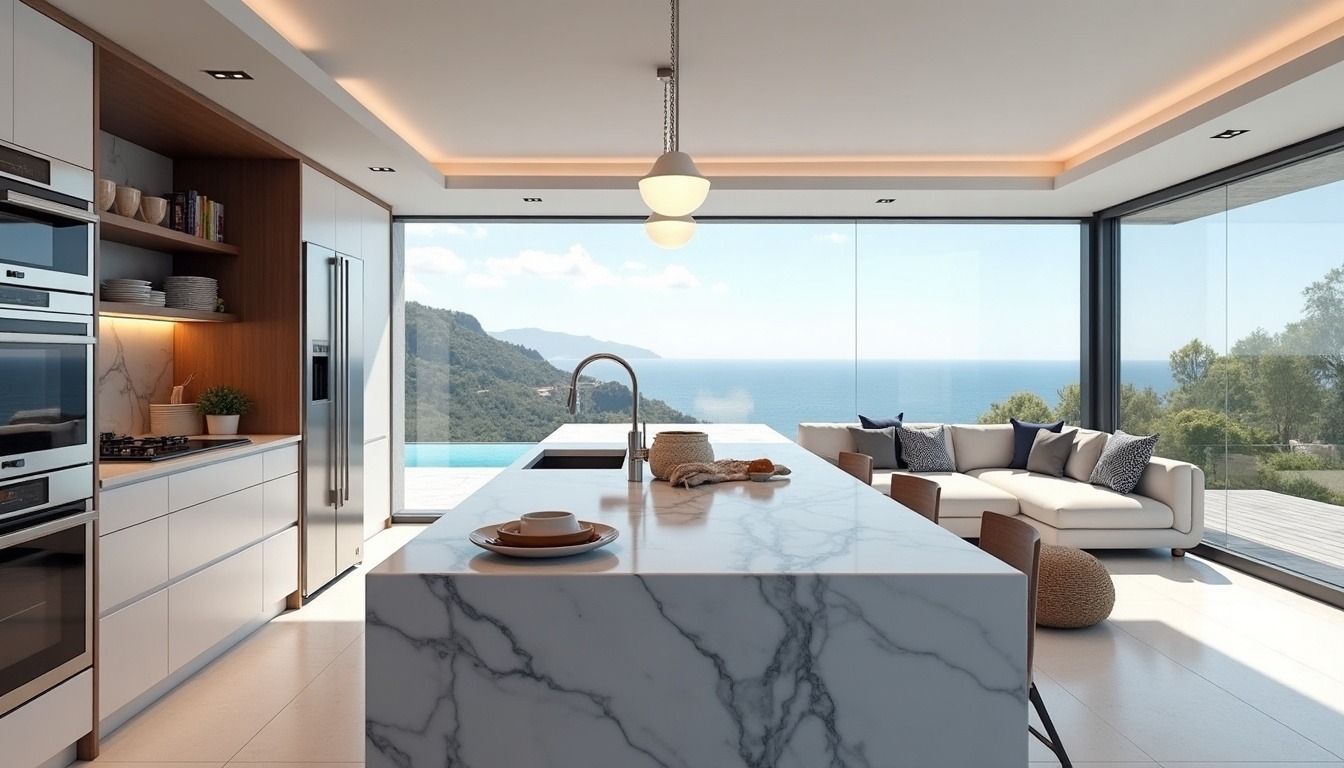
No todos los contratistas están preparados para afrontar una reforma premium. Busca empresas con experiencia demostrada en proyectos de lujo en Marbella, que conozcan las normativas locales, los permisos necesarios y las particularidades de las construcciones en la zona. Pide ejemplos de obras anteriores similares a la tuya y verifica referencias de clientes anteriores. Un contratista especializado en reformas premium suele contar con un equipo multidisciplinar: arquitectos, diseñadores de interiores, ingenieros y artesanos. Además, debe estar al día en tendencias de diseño sostenible y domótica, cada vez más demandadas en el segmento premium.
Portfolio y referencias
Solicita un portfolio detallado de proyectos realizados en Marbella. Valora la coherencia estética, la calidad de los acabados y la resolución de espacios complejos. Pide contacto de al menos tres clientes anteriores para conocer su experiencia en cuanto a cumplimiento de plazos, presupuesto y comunicación. Un contratista de confianza no dudará en proporcionarte estas referencias.
Certificaciones y seguros
Asegúrate de que el contratista dispone de todas las licencias necesarias, seguro de responsabilidad civil y garantías sobre la obra. En reformas premium, la tranquilidad es fundamental. Exige documentación que acredite su solvencia y profesionalidad.
Evaluación de competencias técnicas del equipo
El equipo multidisciplinar debe incluir un arquitecto con registro en el COAMálaga, un ingeniero de edificación especializado en estructuras de acero y hormigón, y un diseñador de interiores con experiencia en proyectos de lujo. Verifica que los artesanos, como carpinteros y marmolistas, cuenten con certificaciones en técnicas tradicionales y modernas, como el uso de CNC para maderas nobles o el pulido de mármol con abrasivos de diamante de grano 3000. Pregunta por la formación continua del equipo en normativas europeas, como la EN 13279 para yesos o la EN 14411 para baldosas cerámicas. Un contratista que invierte en capacitación técnica reduce los errores de instalación en un 40%, según datos del sector. Además, solicita un plan de control de calidad basado en la ISO 9001, con inspecciones semanales y registros fotográficos de cada fase.
Materiales y acabados de alta gama
La selección de materiales es uno de los pilares de una reforma premium. El contratista debe tener acceso a proveedores de materiales exclusivos: maderas nobles, piedras naturales, mármoles, cerámicas de diseño, carpintería a medida, sistemas de iluminación avanzados y acabados personalizados. Pregunta por las marcas y procedencias de los materiales que utilizarán. Un buen contratista te asesorará sobre las mejores opciones según tu estilo y presupuesto, garantizando durabilidad y estética. En Marbella, donde el clima y la luz son singulares, es importante elegir materiales que resistan la humedad costera y el sol intenso sin perder su belleza.
Especificaciones técnicas de materiales clave
Para suelos de mármol, como el Carrara o el Crema Marfil, exige un espesor mínimo de 20 mm y una resistencia a la compresión superior a 100 MPa, según la norma UNE-EN 1342. La porosidad debe ser inferior al 0.5% para evitar manchas por humedad salina, común en la costa. En carpintería de madera, como el roble americano o el iroko, la humedad relativa de la madera debe estabilizarse al 8-10% antes de la instalación, con un tratamiento fungicida e insecticida según la norma UNE 56810. Para cerámicas de diseño, como las de Porcelanosa o Vives, verifica la resistencia al deslizamiento (clase 3 o superior) y la dureza superficial (Mohs 7+). Los sistemas de iluminación LED deben tener un índice de reproducción cromática (CRI) superior a 90 y una temperatura de color regulable entre 2700K y 4000K, con una vida útil de 50.000 horas. En Marbella, los materiales exteriores, como la piedra caliza para terrazas, deben soportar ciclos de hielo-deshielo según la norma EN 12371, con una pérdida de masa inferior al 1% tras 56 ciclos.
Proveedores y logística de materiales exclusivos
Los contratistas premium suelen trabajar con proveedores locales e internacionales, como Marmolería Marbella para piedras naturales o Carpintería Andaluza para maderas a medida. Solicita certificados de origen y trazabilidad, especialmente para mármoles italianos o maderas tropicales certificadas FSC. La logística debe incluir almacenamiento en condiciones controladas de temperatura (20-25°C) y humedad (50-60%) para evitar deformaciones. Para materiales importados, como el ónix de Pakistán o el granito de Brasil, el contratista debe gestionar aduanas y aranceles, que pueden añadir un 10-15% al coste. Pregunta por plazos de entrega: los materiales exclusivos pueden tardar de 4 a 8 semanas, por lo que es clave planificar con antelación para evitar retrasos en obra. Un buen contratista mantiene un stock de seguridad del 10% para materiales críticos, como baldosas de edición limitada.
Gestión de plazos y presupuesto
Los retrasos y los sobrecostes son frecuentes en las reformas. Para evitarlos, el contratista debe presentar un plan de obra detallado con hitos y fechas, así como un presupuesto desglosado por partidas. En las reformas premium, la transparencia es clave. Negocia un contrato que incluya penalizaciones por incumplimiento de plazos y un protocolo para cambios sobre la marcha. Un buen profesional anticipará posibles imprevistos y los comunicará con antelación. Recuerda que el precio más bajo no siempre es el mejor: valora la relación calidad-precio y la confianza que te transmite el contratista.
Planificación de obra con diagrama de Gantt
Exige un diagrama de Gantt detallado con hitos semanales, como demolición (semana 1-2), instalación de sistemas (semana 3-6), acabados (semana 7-12) y entrega (semana 13-16). Cada hito debe incluir tareas específicas, como la colocación de aislamiento térmico (duración 3 días) o la instalación de iluminación empotrada (2 días). El contratista debe asignar recursos humanos y materiales a cada tarea, con un margen de contingencia del 10% para imprevistos. En Marbella, los retrasos por condiciones climáticas (lluvias intensas en noviembre) son comunes, por lo que el plan debe incluir días de reserva. Utiliza herramientas como Microsoft Project o Trello para seguimiento en tiempo real, con reuniones semanales de progreso. Un estudio de la Universidad Politécnica de Madrid muestra que la planificación con Gantt reduce los retrasos en un 35%.
Control de presupuesto con partidas desglosadas
Referencias
Preguntas Frecuentes
¿Cuánto tiempo dura una reforma premium en Marbella?
Depende de la magnitud del proyecto, pero una reforma integral de una vivienda de lujo suele durar entre 6 y 12 meses. Reformas parciales pueden completarse en 2-4 meses. El contratista debe proporcionarte un cronograma realista.
¿Qué presupuesto mínimo se necesita para una reforma premium?
No hay una cifra fija, pero en Marbella los proyectos premium suelen partir de 60.000 € para reformas parciales y superan los 150.000 € para integrales. El coste depende de los metros cuadrados, materiales y grado de personalización.
¿Es necesario un arquitecto para una reforma premium?
Sí, especialmente si se modifican estructuras o se busca un diseño exclusivo. Muchos contratistas premium trabajan con arquitectos e interioristas de confianza. Asegúrate de que el equipo incluya estos perfiles.
¿Cómo garantizar que los materiales sean de calidad?
Exige marcas reconocidas y muestra físicas antes de la compra. Visita showrooms y pide certificados de origen. Un contratista premium debe tener relaciones con proveedores de materiales de alta gama.